Corner Sofas in Ireland: How to Choose the Right One
Last updated: August 2026. Written by the M&I Interiors showroom team in Portlaoise, from the questions we answer most often on the floor.
A corner sofa is the biggest single piece of furniture most people ever buy for a living room, and the one that goes wrong most often. Not because the sofa is bad — because the orientation was backwards, the doorway was never measured, or the fabric was chosen for a showroom rather than a household. This guide covers the five decisions that matter, in the order you should make them. If you are deciding where to buy, our sofa buying guide for Ireland outlines questions to ask before ordering.
1. Left-hand or right-hand? Decide it facing the sofa
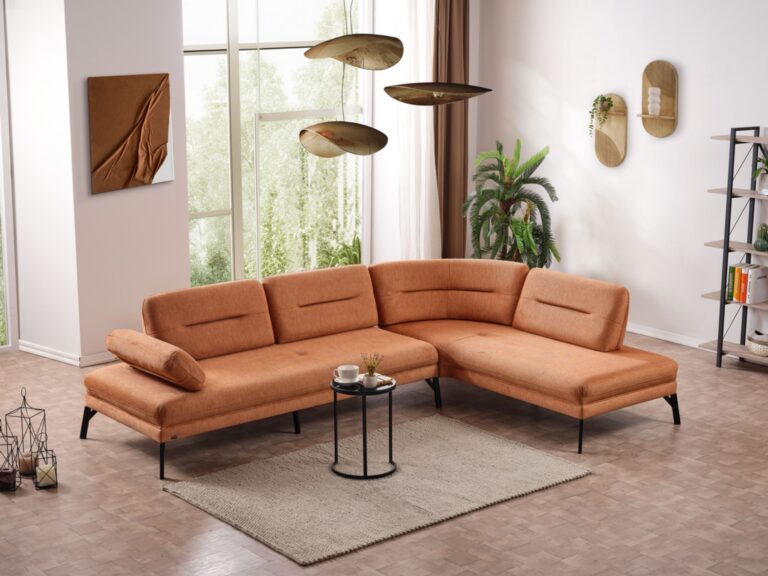
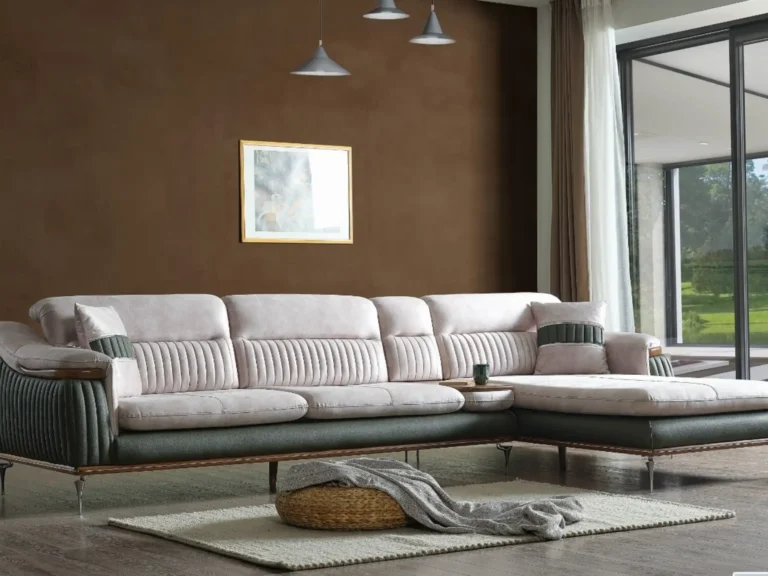
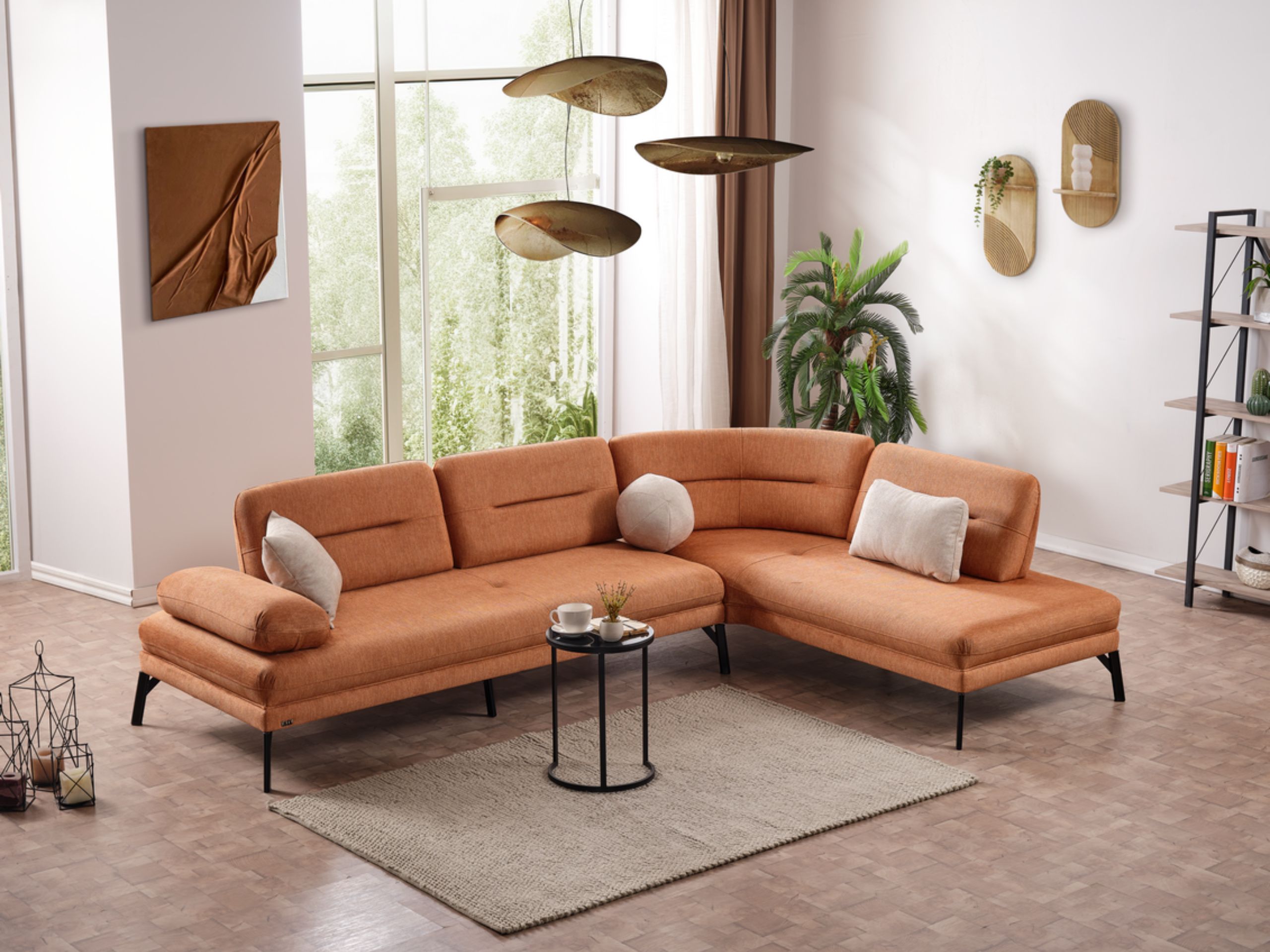
This is the single most common mistake, and it is an expensive one. A corner sofa’s orientation describes which side the long chaise section sits on as you stand in front of the sofa, looking at it — not as you sit on it. A right-hand corner has the chaise to your right when you face it.
Manufacturers do not all use the same convention, which is why we describe every corner sofa on this site the same way: facing it. If a product page says “right orientation”, stand where your coffee table would go and picture the chaise on your right.
A quick way to get it right: sketch the room from above, mark the wall the sofa backs onto, and draw the chaise where it needs to go — usually away from the doorway and towards the window or the television. Then read off left or right from the front.
2. Measure the room — then take 15–20 cm off
Measure the wall the sofa will sit against and the return wall the chaise will run along. Then subtract 15–20 cm from each. A corner sofa that fills a wall edge to edge looks wedged in, and you need room to walk round the end of the chaise.
- Walkway: keep at least 60 cm clear past the end of the chaise.
- Coffee table: 40–45 cm between the seat edge and the table — close enough to reach, far enough to pass.
- Radiators and sockets: a chaise running along a radiator wall blocks the heat. Check what is on both walls before you commit to an orientation.
For reference, the corner sofas we stock run from around 310 cm on the long side for a compact set to 336 cm for the largest, with chaise depths of roughly 185–215 cm. Dimensions are listed on each corner sofa page.
3. Measure the doorway — the diagonal is what counts
A sofa does not go through a door flat. It goes through on its end or on the diagonal, so the number that matters is not the door’s width but the diagonal of the opening — and the diagonal of the sofa’s smallest cross-section. Measure:
- The front door and the living room door: width, height, and corner to corner.
- Any hallway turn between the two, including the width of the hall at the turn.
- Stairs, if the room is upstairs: the width, and the ceiling height at the turn.
Modular corner sofas sidestep most of this, because they arrive in sections and are assembled in the room. If access is tight — a narrow hall, an awkward turn, an apartment stairwell — a modular design is usually the right answer regardless of style. Most of our made-to-order sofas are modular for exactly this reason.
4. L-shaped, chaise, modular, corner bed: what the words mean
The terms get used loosely, including by retailers. Here is what they actually describe.
- Corner sofa / L-shaped sofa: the same thing. Two seating runs meeting at a right angle.
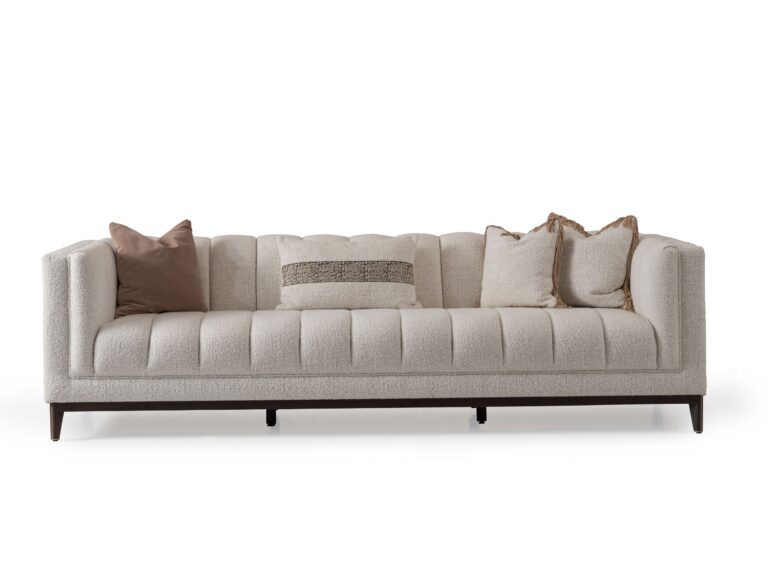
- Chaise sofa: a standard sofa with one seat extended forward into a lounger. Smaller footprint than a true corner; the “L” is shallower.
- Modular: built from separate sections — seats, corner piece, chaise, console — so the layout can change and the sofa can grow. Sold per section; the price shown is usually the smallest configuration.
- Corner sofa bed: a corner sofa where one run pulls out into a bed, often with storage under the chaise. Heavier, and the mechanism adds depth — measure with the bed extended. See our sofa beds.
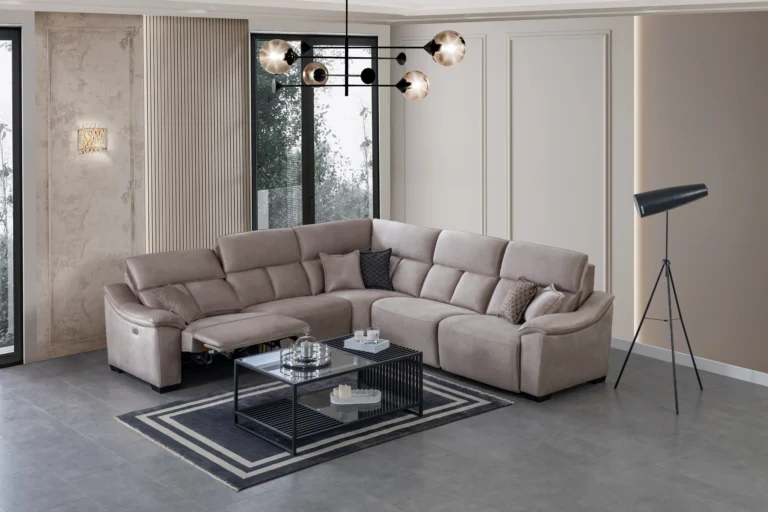
- Recliner corner: end seats that recline electrically. They need 30 cm or more of clearance behind to recline fully, so they cannot sit tight against a wall.
5. Choose the fabric for the household, not the photo
A corner sofa carries more traffic than any other seat in the house, and in Irish homes it also has to cope with central heating for eight months of the year and damp air for the other four. A few practical rules:
- Kids and dogs: tightly woven fabrics, Nubuck-type finishes that wipe clean, or leather. Avoid loose weaves and deep-pile velvet on the seats.
- Removable covers on the back cushions are worth paying for. Several of our recliner ranges have zip-off backs for this reason.
- Seat depth matters more than overall depth. 55–60 cm suits most people sitting upright; deeper suits taller frames and people who curl up.
- Light colours are not the risk people think, provided the fabric is cleanable. A cream sofa in a wipe-clean weave outlasts a dark one in a loose weave.
We have written a separate guide on fabric versus leather that goes deeper on this.
A checklist before you order
- Orientation confirmed facing the sofa, and drawn on a room sketch.
- Both walls measured, minus 15–20 cm, with 60 cm walkway past the chaise.
- Every doorway and turn measured on the diagonal — or a modular design chosen.
- Radiators, sockets and window reveals checked on both walls.
- Fabric chosen for who actually sits on it.
See them in person
Browse our corner sofas and the wider sofa collection, or bring your room measurements to the showroom at Kylekiproe, Portlaoise and we will work through the layout with you. Open Tuesday to Saturday, 10am–5pm — or call (045) 433 585.
For related guidance, read our modular furniture.